PLO Poker Strategy: How to Play Kings and High Pairs
In Pot-Limit Omaha, the true strength of high pocket pairs depends on side cards, position, and structure — understand these factors to make better preflop decisions.


Our recent article looked at inexperienced players' most common mistakes, including playing too aggressively in multiway pots and overplaying Aces. This time, we'd like to give you additional advice, emphasizing the strategy for hands containing other high pocket pairs.
Let's start with a recommendation that holds true for most types and formats of poker games.
Do Not Open-Limp in Pot Limit Omaha
It doesn't matter whether you would like to see flop cheaply or trap!
Omaha poker is played almost exclusively in a cash game format. This fact has two most important consequences:
- there is no ICM factor (since all decisions are driven by CEV),
- the rake is influencing the ranges you should play.
Since most Pot Limit Omaha games run on low-to-mid stakes, the rake is a factor you must pay attention to. Due to its existence, you won't be able to play many borderline hands in highly-raked poker games profitably. Playing tighter is an efficient way to mitigate the impact of high rake. And if you play tight, there's usually no strong incentive to limp any hand combinations when you can open them.
There are some fringe cases in which limping is a viable option, but as a rule of thumb, you can remove limping from your Omaha poker strategy, especially if you're still learning the game.
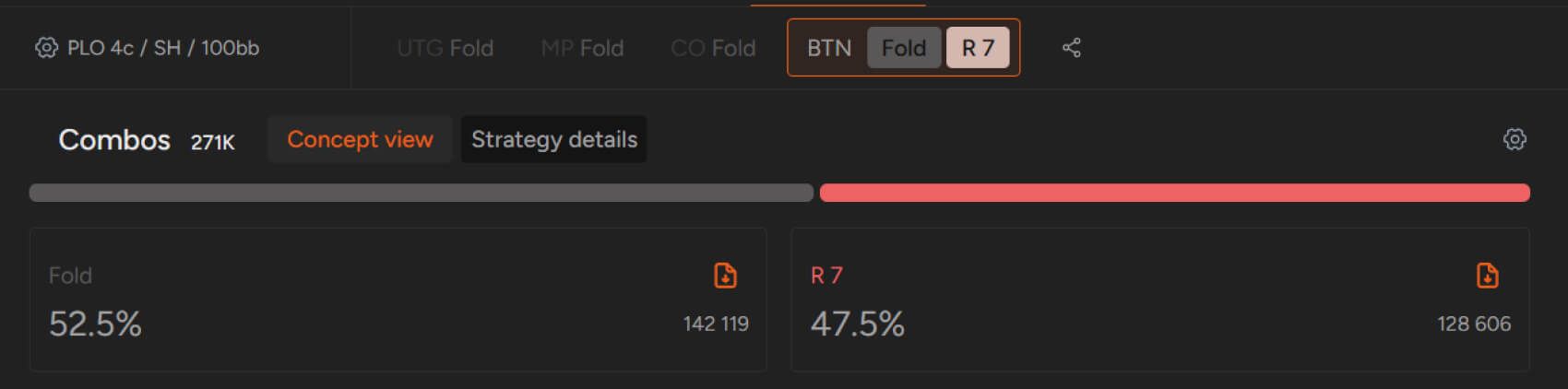
Don’t Get Too Attached to High Pocket Pairs
Holding a connected, double-suited high pair like JJ87ds feels great — and with good reason. These hands look powerful and often are strong. The problem is that they can also be misleading.
As we’ve already pointed out, the average winning hand in PLO is significantly stronger than in No-Limit Hold’em. That means hands that look premium preflop often don’t justify heavy postflop commitment unless they improve meaningfully.
We touched on this in our article about common preflop mistakes and in our discussion of playing Aces preflop, but it’s worth reiterating here:
In PLO, Side Cards Make or Break the Value of Most Hands
This is especially true preflop and is one of the most important adjustments for players transitioning from Hold’em.
In NLH, folding Kings preflop is almost never correct. You dominate nearly every hand except Aces, and running into AA is considered a standard cooler.
In PLO, equities run much closer together. As a result, your preflop stacking thresholds need to be far more conservative.
Stacking off preflop with AAxx in a heads-up pot is generally fine — you’ll usually be ahead, or close to breakeven even in the worst cases. The same is not true for KKxx hands.

Because preflop equity edges are smaller (you rarely exceed ~65–66%), most players — especially at lower stakes — are quite passive preflop and will only continue aggressively with AAxx.
That’s where Kings run into trouble.
Against passive opponents, heavy preflop action is a strong indicator of Aces. In those situations, committing large amounts of money with KKxx is rarely justified.
Kings perform best as 3-bets or 4-bets against overly aggressive players who tend to overvalue their holdings. Against maniacs, strong KKxx combinations do well — you’ll often get significant money in with decent equity, and the resulting low stack-to-pot ratio makes postflop play more straightforward.
One particularly important upgrade for Kings is holding an Ace. An Ace in your hand reduces the likelihood that your opponent has AAxx and improves your playability on Ace-high boards.
A related concept applies when choosing hands to 4-bet bluff (which should happen rarely):
prefer hands that do not contain Kings.
By blocking fewer KKxx combinations, you increase the chance that your opponent holds Kings — hands that are far more likely to fold — thereby improving your fold equity.
High Pairs Win by Making Sets, Not by Being Overpairs
High pairs, like QQ-JJ, have decent raw equity but seldom will be a winning hand at showdown when they are just an overpair. That brings us to another important point.
The lower your pocket pair is, the more important its side cards are. Aces (and Kings, to some extent) retain some of their playability on static boards when you have an overpair and not much going on with your side cards.
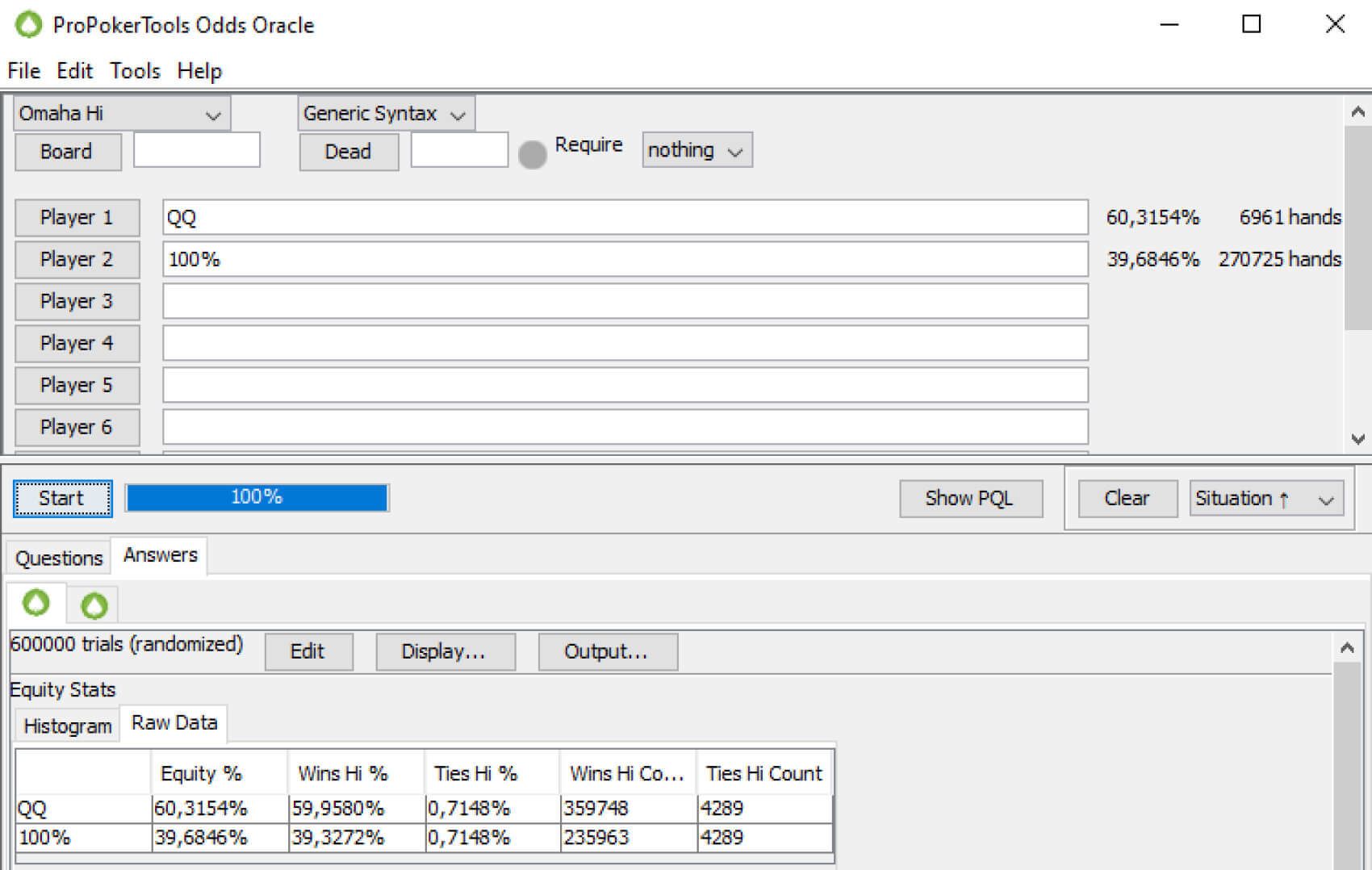
At the same time, Queens and Jacks, with no serious backup, will play poorly, especially when we consider that people in your average Omaha poker game are very call-happy, resulting in most flops going multiway.
Omaha Hands Can Be Deceptive
Learning to distinguish between strong and weak paired hands takes time, but it’s absolutely achievable with structured study and repetition.
That’s exactly why we created PLO Genius — to help you understand which starting hands truly perform well and how to build a solid, profitable preflop strategy in Pot-Limit Omaha.
If you want to deepen your understanding of hand quality, side-card importance, and optimal preflop play, exploring PLO Genius is a great next step.