How to Play Multiway Pots in Pot Limit Omaha
Mastering the art of navigating multiways in PLO will skyrocket your win rate!


If there is one thing that low- and mid-stakes poker players have in common, it's this: they hate folding. This is especially true in live cash games, where recreational players get attached to their hole cards fast.
Pot Limit Omaha makes this even more common than No-Limit Hold'em. Why? Because a four-card starting hand connects with the board in more ways than a two-card hand does. Anyone who has played a casual $2/$5 game knows the pattern: almost nobody folds preflop, and almost everyone sees the flop.
Such an environment gives you an excellent opportunity to achieve a high win-rate; after all, when people are too splashy, they will eventually lose money, but it requires skill to navigate pots with multiple players accordingly.
This creates a great opportunity for a skilled player. Loose, "splashy" opponents lose money over time — but only if you know how to play multiway pots correctly. Below are the key adjustments you need to make.
Don't Get Attached to Mediocre Hands
Some players say PLO is "a game of the nuts." That's not entirely true, but it is true that you need more equity to continue in a multiway pot than in a heads-up pot.
Keep this in mind with hands like:
- Draws to a second-nut straight
- Non-nut flush draws
- Middle sets
These hands can be strong enough to raise or call against one opponent, because your outs are usually "live." Against two or more opponents, the situation changes fast. A non-nut flush draw or a low straight draw is very often drawing dead in a multiway pot.
A simple equity check: on the flop, your fair share of the pot is roughly:
- 33% in a three-way pot
- 25% in a four-way pot
- 20% in a five-way pot
If your hand's real equity is clearly below that number, it's usually a fold — or at least not a hand you should be building the pot with.
Bonus tip: be careful with Aces on a high stack-to-pot ratio (SPR) in multiway pots. Pocket Aces have great equity preflop, but that can change completely once the board comes out. If you flop only an overpair with no extra equity (no nut flush draw, no wrap), you're often better off folding to pressure against multiple opponents — you simply don't have enough outs to improve.
Multiway pots are tricky, and good hand selection is the single biggest factor that will save you money here.
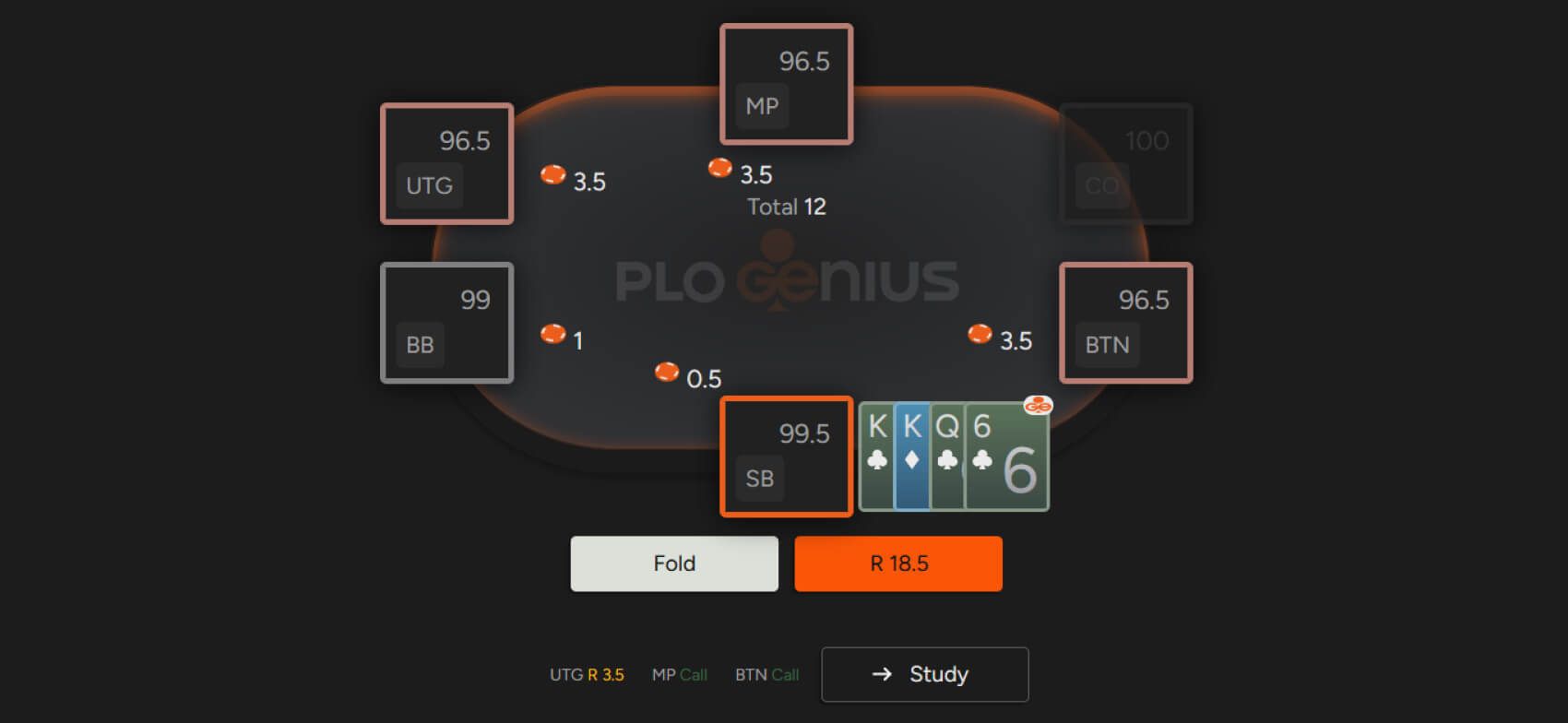
Don't Cold-Call Weak Hands from the Big Blind
It's tempting to defend the Big Blind with almost anything, and it's even more tempting in PLO than in Hold'em. Don't do it on autopilot.
Calling with hands that have no real postflop playability is a costly, silent leak — even strong players fall into it without noticing.
Playing correct PLO preflop strategy protects you from getting stuck in difficult multiway spots later on. In PLO, a hand can look strong and still be far from good enough to continue against several opponents. Loose preflop calls get punished harder here than in Hold'em.
For example: stacking off with a bottom or middle set is rarely a mistake in No-Limit Hold'em. Using that same logic in PLO can seriously hurt your win rate.
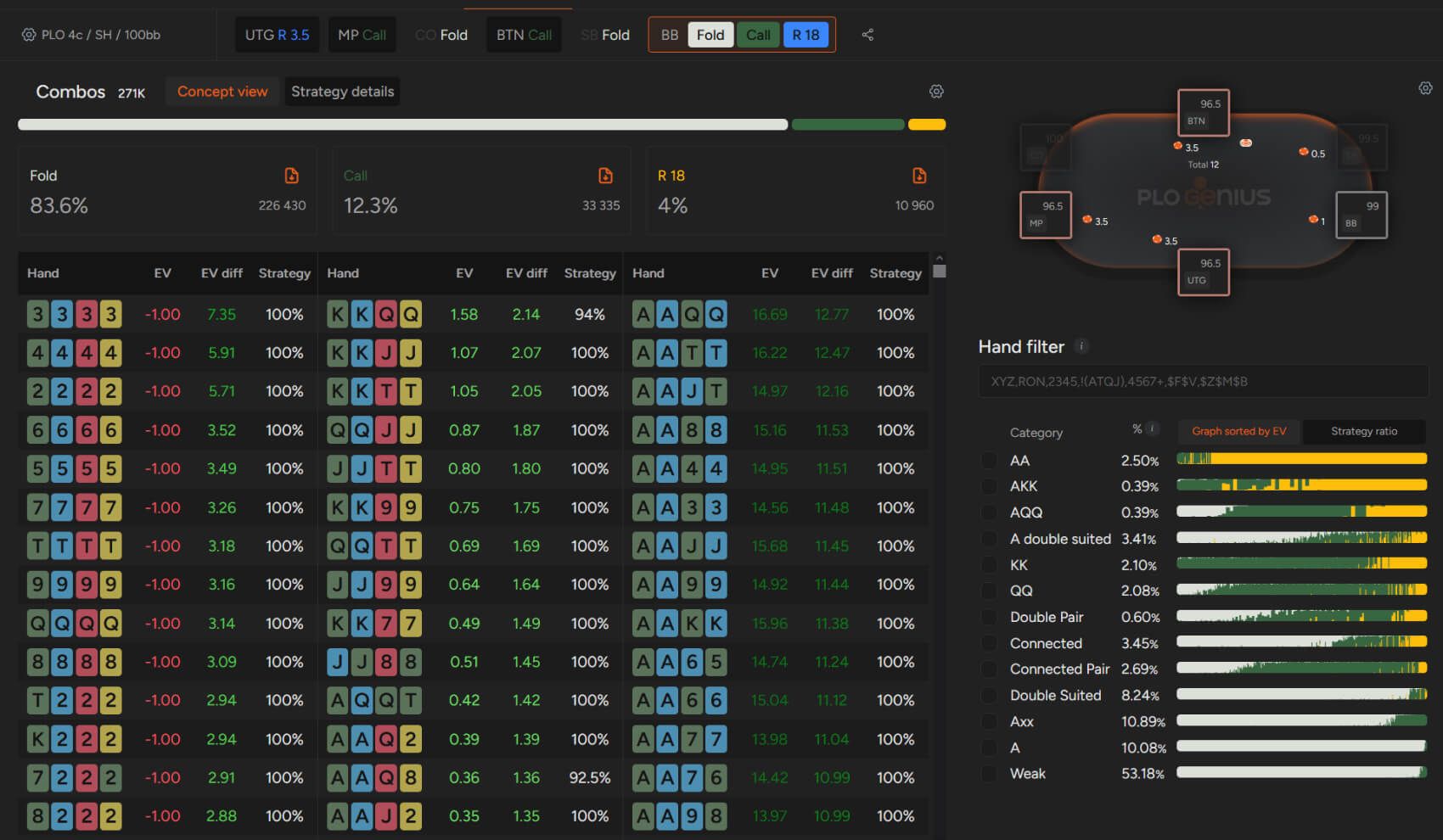
Respect Position Even More Than Usual
Being out of position (OOP) is never ideal in poker, but it matters more in PLO than in most other games. Combine "out of position" with "multiple opponents," and you get one of the toughest spots in poker.
That's why you should tighten up — not just in the Big Blind, but also in early and middle position. Even if nobody at your table 3-bets you, playing too many hands from early position rarely pays off. A cheap price to see the flop doesn't make a mediocre hand profitable in a multiway pot.
Play Your Nut Draws Aggressively
If your hand selection is solid, you'll often end up with the best draw at the table. When opponents are willing to put money in with inferior draws or weak made hands, make them pay for it.
Playing your draws aggressively helps you realize their full equity. As explained above, a mediocre draw or a mediocre made hand is a bad place to be in a multiway pot — so when you have the strongest draw, apply pressure.
This puts your opponents in a lose-lose spot:
- They call with a worse draw and risk losing a big pot, or
- They fold, and you win the pot without a showdown.

Study Multiway Spots with a Solver
Most solvers are built for heads-up situations, but PLO Genius also helps you understand multiway pots — showing you what to do once several players are already in.
That's a real edge over players who only study one-on-one scenarios. You can also adjust stack depth, game format, and rake structure, all in one app.
Want to sharpen your Pot Limit Omaha strategy even further? Explore more PLO strategy articles on the PLO Genius blog.